

Exploring the Techniques Behind Stainless Steel Forging: A Comprehensive Guide
Release time:
2025-04-21
Exploring the Techniques Behind Stainless Steel Forging Table of Contents 1. Introduction to Stainless Steel Forging 2. What is Stainless Steel Forging? 3. Benefits of Stainless Steel Forging 4. Types of Stainless Steel Forging Techniques 4.1 Open Die Forging 4.2 Closed Die Forging 4.3 Precision Forging 5. The Stainless Ste

Exploring the Techniques Behind Stainless Steel Forging
Table of Contents
- 1. Introduction to Stainless Steel Forging
- 2. What is Stainless Steel Forging?
- 3. Benefits of Stainless Steel Forging
- 4. Types of Stainless Steel Forging Techniques
- 5. The Stainless Steel Forging Process
- 6. Applications of Forged Stainless Steel
- 7. The Future of Stainless Steel Forging
- 8. Frequently Asked Questions
- 9. Conclusion
1. Introduction to Stainless Steel Forging
Stainless steel forging is a vital manufacturing process that combines high strength and corrosion resistance, making it indispensable in numerous industries. The forging process enhances the material properties of stainless steel, allowing it to withstand extreme conditions while maintaining its structural integrity. In this article, we explore the various techniques used in stainless steel forging, delving into their advantages and applications.
2. What is Stainless Steel Forging?
Stainless steel forging is the process of shaping stainless steel into desired forms through the application of compressive forces. This technique involves heating stainless steel to high temperatures, making it malleable enough to be shaped into various components. The forging process can be performed using different methods, including open-die, closed-die, and precision forging.
Forging not only imparts a specific shape but also refines the internal grain structure of the stainless steel, resulting in improved mechanical properties such as toughness, ductility, and fatigue resistance.
3. Benefits of Stainless Steel Forging
Stainless steel forging presents a myriad of benefits, making it a preferred choice over other manufacturing processes. Some of the primary advantages include:
3.1 Enhanced Mechanical Properties
The forging process aligns the grain structure of the stainless steel, enhancing its strength and resilience. Forged components exhibit better stress distribution and are less prone to defects.
3.2 Corrosion Resistance
Stainless steel is inherently resistant to rust and corrosion due to the presence of chromium. The forging process further improves this characteristic, making it ideal for applications in hostile environments.
3.3 Cost-Effectiveness
While the initial investment in forging equipment may be higher, the longevity and durability of forged parts result in lower long-term costs. Forged components require less maintenance and replacement, providing significant savings over time.
3.4 Customization and Versatility
Forging allows for a high degree of customization, enabling manufacturers to produce parts in various shapes and sizes tailored to specific applications.
4. Types of Stainless Steel Forging Techniques
There are several techniques employed in stainless steel forging, each with its unique advantages and applications. Understanding these methods is crucial for selecting the appropriate technique for a specific project.
4.1 Open Die Forging
Open die forging involves shaping the metal between two flat dies, allowing for significant deformation. This technique is well-suited for creating large, complex shapes and is often used for manufacturing components like shafts and flanges.
4.2 Closed Die Forging
Closed die forging, also known as impression die forging, involves two dies that enclose the material, shaping it into intricate designs. This method is ideal for high-volume production of components with tight tolerances, such as automotive parts.
4.3 Precision Forging
Precision forging is a specialized form of closed die forging that produces highly accurate components with minimal material waste. This technique is commonly used in industries that require exact specifications, such as aerospace and medical device manufacturing.
5. The Stainless Steel Forging Process
The stainless steel forging process can be broken down into several key stages:
5.1 Heating the Metal
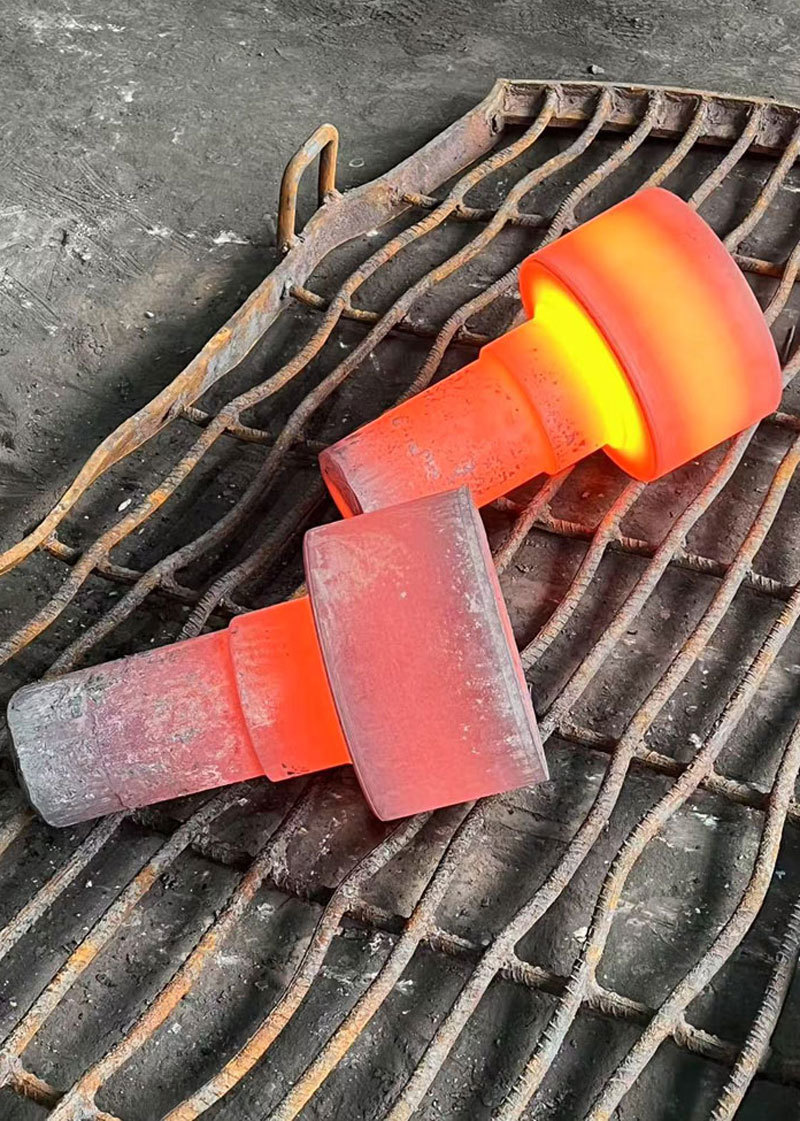
The process begins with heating the stainless steel to a specific temperature, usually between 1,100°F (593°C) and 2,200°F (1,204°C), depending on the alloy. This step is crucial as it enhances the malleability of the material.
5.2 Shaping the Metal
Once heated, the stainless steel is shaped using the selected forging technique. The force applied during this stage is critical to achieving the desired shape and mechanical properties.
5.3 Cooling and Finishing
After shaping, the forged components are allowed to cool. Additional finishing processes, such as machining, grinding, or polishing, may be applied to achieve specific surface qualities and tolerances.
6. Applications of Forged Stainless Steel
Forged stainless steel components are utilized in a wide range of industries due to their superior properties. Some common applications include:
6.1 Aerospace Industry
In the aerospace sector, forged stainless steel is used for manufacturing critical components such as landing gear, engine mounts, and structural parts due to its strength and lightweight characteristics.
6.2 Automotive Industry
The automotive industry relies on forged stainless steel for parts like crankshafts, gears, and suspension components, where durability and performance are paramount.
6.3 Oil and Gas Industry
Forged stainless steel is essential for valves, pumps, and fittings used in oil and gas extraction and processing, where resistance to corrosive environments is crucial.
6.4 Medical Devices
In the medical field, precision-forged stainless steel components are essential for surgical instruments and implants, where hygiene and reliability are critical.
7. The Future of Stainless Steel Forging
The future of stainless steel forging looks promising, driven by advancements in technology and materials science. Emerging techniques such as additive manufacturing and automation are set to revolutionize the forging landscape. Additionally, ongoing research into new stainless steel alloys may lead to even greater performance enhancements and applications across various industries.
8. Frequently Asked Questions
8.1 What is the difference between forged and cast stainless steel?
Forged stainless steel undergoes a compressive force to shape it, resulting in a finer grain structure and enhanced mechanical properties. Cast stainless steel, on the other hand, is poured into a mold and solidifies, which can lead to a less uniform structure.
8.2 Can all stainless steel alloys be forged?
While most stainless steel alloys can be forged, some may require specific temperatures and techniques to achieve optimal results. It’s essential to consult with experts when selecting alloys for forging.
8.3 How does the forging process affect stainless steel's corrosion resistance?
The forging process can enhance the corrosion resistance of stainless steel by refining its microstructure and reducing impurities. However, surface treatments may also be applied for additional protection.
8.4 What industries primarily use forged stainless steel products?
Industries such as aerospace, automotive, oil and gas, and medical devices predominantly use forged stainless steel products due to their strength, durability, and resistance to corrosion.
8.5 What are the environmental impacts of stainless steel forging?
Stainless steel forging is generally considered environmentally friendly, as it can create less waste compared to other manufacturing processes. Moreover, stainless steel is 100% recyclable, contributing to sustainability efforts.
9. Conclusion
Stainless steel forging is an essential technique that enhances the performance and longevity of components across various industries. By understanding the different forging methods and their applications, manufacturers can make informed decisions that lead to superior products. As technology continues to advance, the potential for stainless steel forging to evolve and meet modern demands remains vast. Embracing these techniques not only improves manufacturing efficiency but also ensures the production of high-quality, reliable components that stand the test of time.
Latest developments
Quality Standards in the Forging of Stainless Steel Products: Ensuring Excellence in Metallurgy
Quality Standards in the Forging of Stainless Steel Products Table of Contents Introduction to Stainless Steel Forging The Importance of Quality Standards in Forging Types of Stainless Steel Used in Forging Common Forging Processes in Stainless Steel Manufacturing Quality Assurance Methodologies in Stainless Steel Forging Testing and Certification of Stainless Steel Products Global
Understanding Non-Standard Flanges: A Key Component in Architectural Applications
Non-standard flanges are specialized components that deviate from conventional sizing and design specifications. Unlike standard flanges, which adhere to established dimensions and pressure ratings, non-standard flanges are custom-made to meet unique project requirements. These flanges are crucial in various architectural and construction applications, particularly when dealing with unconventional
The Importance of Quality Control for Japanese Standard Flanges: Ensuring Durability and Reliability
The Importance of Quality Control for Japanese Standard Flanges In the construction and manufacturing sectors, the significance of quality control cannot be overstated, especially for components as crucial as flanges. Japanese standard flanges, known for their precision and durability, require stringent quality control measures to meet the demands of various applications. This article delves into
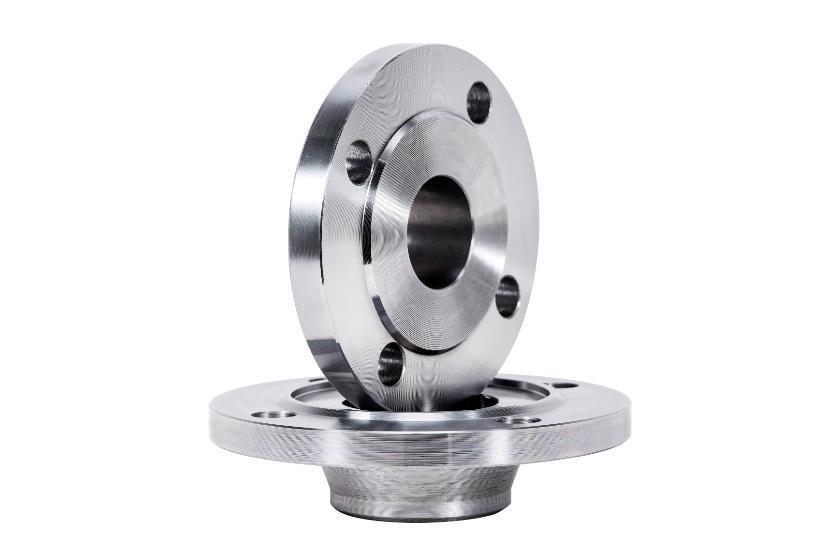
Understanding American Standard Flange in Construction and Decoration Materials
American standard flanges are critical components in the field of construction and decorative materials, particularly in piping systems. These flanges adhere to specific standards established by organizations such as the American National Standards Institute (ANSI) and the American Society of Mechanical Engineers (ASME). Their design and specifications are essential for ensuring compatibility and
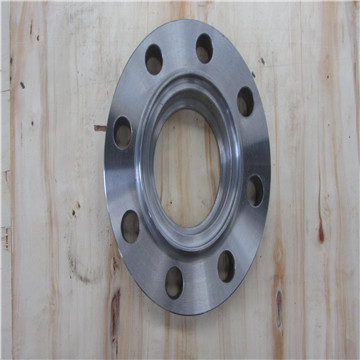
Exploring the Advantages of Using Threaded Flanges in HVAC Systems
Exploring the Advantages of Using Threaded Flanges in HVAC Systems Table of Contents 1. Introduction to Threaded Flanges in HVAC 2. Understanding Threaded Flanges 3. Benefits of Using Threaded Flanges in HVAC Systems 3.1 Superior Sealing Capability 3.2 Ease of Installation and Maintenance 3.3 Cost-Effectiveness 3.4 Versatility i

The Essential Guide to Flanged Connections in Building and Decorative Materials
Flanged connections are vital components in the construction and decorative materials sector, especially in the context of piping systems and fittings. Understanding their function, design, and application can significantly enhance the efficiency and reliability of installations. A flanged connection involves two flanges, which are flat pieces of material with holes for bolts. These flanges are bo
Shandong Xinhao Forging Co.,Ltd.
Tel:+86-15098858482
WeChat: 543983004
Email:xinhaoflange@gmail.com
Whatsapp:8615098858482
Website:www.xhflange.com

TikTok