

From Raw Material to Forged Excellence: The Comprehensive Journey of Stainless Steel
Release time:
2025-05-21
From Raw Material to Forged Excellence: The Comprehensive Journey of Stainless Steel Table of Contents 1. Introduction to Stainless Steel 2. Understanding Raw Materials for Stainless Steel 3. The Steel-Making Process: Converting Raw Materials into Steel 4. Key Alloying Elements in Stainless Steel 5. The Forging Process: Shaping Excellence 6. Applications of Stainless Steel
From Raw Material to Forged Excellence: The Comprehensive Journey of Stainless Steel
Table of Contents
- 1. Introduction to Stainless Steel
- 2. Understanding Raw Materials for Stainless Steel
- 3. The Steel-Making Process: Converting Raw Materials into Steel
- 4. Key Alloying Elements in Stainless Steel
- 5. The Forging Process: Shaping Excellence
- 6. Applications of Stainless Steel in Various Industries
- 7. Innovations in Stainless Steel Production
- 8. Environmental Considerations in Stainless Steel Production
- 9. Conclusion
- 10. Frequently Asked Questions
1. Introduction to Stainless Steel
Stainless steel has become an indispensable material across various industries, known for its **durability**, **corrosion resistance**, and **aesthetic appeal**. The journey from raw materials to finished stainless steel products is complex, involving several stages of production, treatment, and refinement. This article delves into the intricate processes that transform raw resources into high-quality stainless steel, highlighting its significance in contemporary society.
2. Understanding Raw Materials for Stainless Steel
The primary raw materials used in stainless steel production include **iron ore**, **nickel**, **chromium**, and **manganese**. Each of these elements plays a crucial role in determining the properties of the final product.
Iron Ore
Iron ore is the foundation of stainless steel. It is extracted from the earth's crust and refined into pig iron through smelting. The iron content in the ore directly influences the quality of the stainless steel produced.
Chromium
Chromium is the key element that gives stainless steel its **corrosion-resistant** properties. A minimum of 10.5% chromium content is required for a steel alloy to be classified as stainless steel. This element forms a protective layer of chromium oxide on the steel surface, which prevents oxidation and rust.
Nickel
Nickel enhances the **ductility** and **toughness** of stainless steel, making it more malleable and suitable for various applications. It also plays a vital role in improving the alloy's resistance to corrosion.
Manganese
Manganese is often added to stainless steel to improve its strength and wear resistance. It also helps in deoxidizing the steel during the melting process, ensuring a higher quality product.
3. The Steel-Making Process: Converting Raw Materials into Steel
Once the raw materials are gathered, they undergo a series of processes to produce stainless steel.
Smelting
The first step in the steel-making process is smelting, where iron ore is heated in a furnace to extract molten iron. This is typically done using either a blast furnace or an electric arc furnace.
Refining
After smelting, the next phase involves refining the molten iron to remove impurities. This is done by adding fluxing agents, which bind with impurities and are removed as slag. The result is a purer form of iron, ready to be alloyed with chromium, nickel, and other elements.
Alloying
During the alloying stage, specific amounts of chromium, nickel, and other elements are added to the refined iron. The mixture is then melted together to create a homogeneous alloy.
4. Key Alloying Elements in Stainless Steel
In addition to chromium and nickel, several other alloying elements can be included in stainless steel formulations to enhance particular characteristics.
Molybdenum
Molybdenum increases corrosion resistance, particularly against chlorides, making it invaluable for marine applications and environments with high salinity.
Titanium
Titanium improves the weldability of stainless steel and helps stabilize the structure against high-temperature environments.
Columbium
Columbium, also known as niobium, is used to enhance strength and stability, particularly in high-temperature applications.
5. The Forging Process: Shaping Excellence
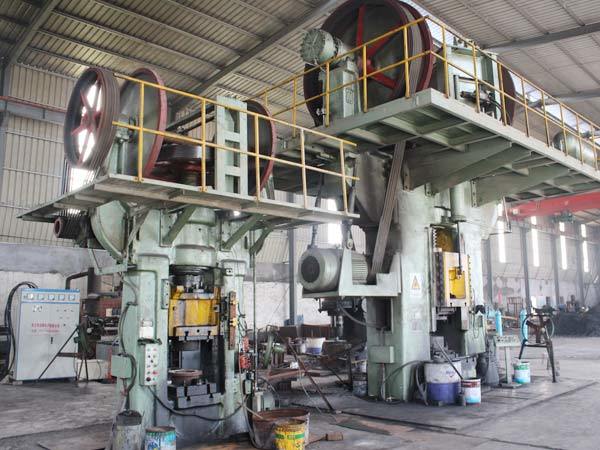
After the stainless steel has been produced, it undergoes forging. This is a crucial step that transforms the molten metal into usable forms.
Hot Forging
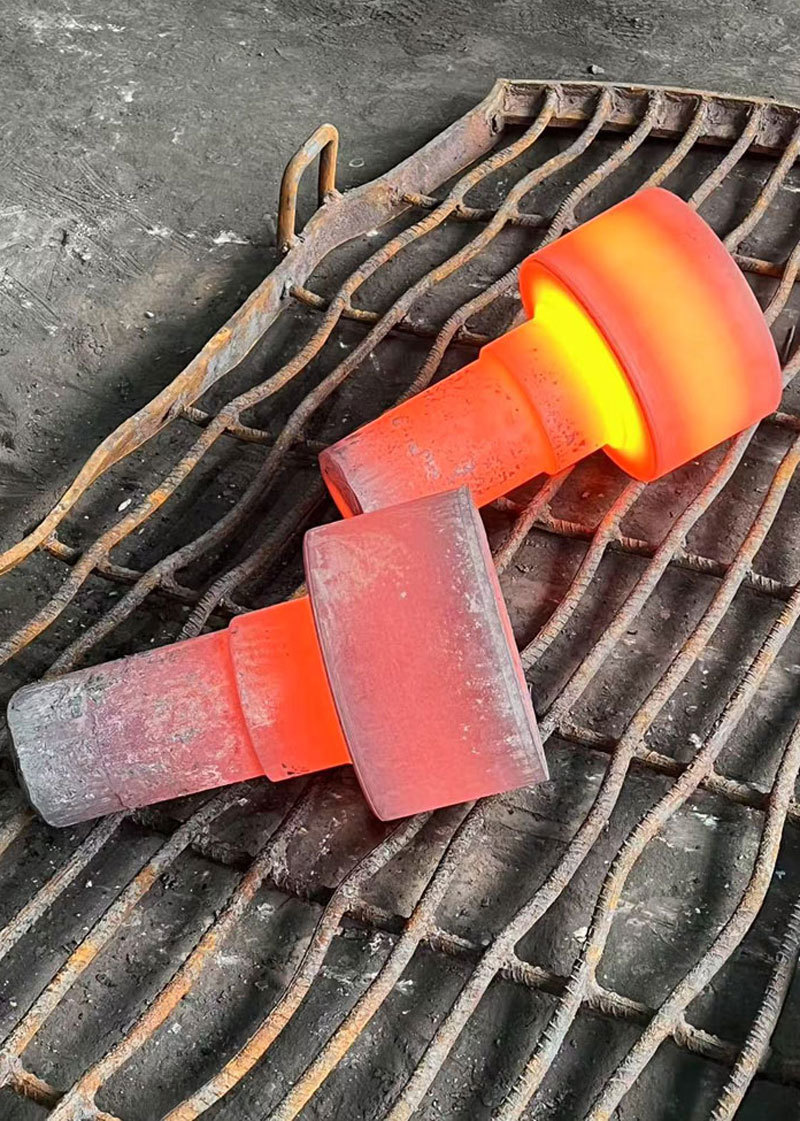
Hot forging involves heating the stainless steel to a temperature that allows for easier shaping. The heated metal is then pressed or hammered into the desired shape, resulting in a dense, strong material.
Cold Forging
In contrast, cold forging is performed at room temperature. This method is used for precision parts and often enhances the mechanical properties of stainless steel through strain hardening.
Heat Treatment
Post-forging, heat treatments are applied to optimize the mechanical properties of stainless steel further. Processes such as annealing relieve stresses and improve ductility, while quenching can increase hardness.
6. Applications of Stainless Steel in Various Industries
Stainless steel finds applications in a myriad of industries due to its unique properties.
Construction and Architecture
In construction, stainless steel is used for structural elements, decorative facades, and roofing due to its aesthetic appeal and durability. Architects favor this material for its ability to withstand harsh environments while maintaining its visual integrity.
Automotive Industry
The automotive sector employs stainless steel in exhaust systems, chassis components, and decorative trim. Its resistance to corrosion and high temperatures makes it ideal for these applications.
Medical Equipment
Stainless steel is widely used in the manufacture of surgical instruments and medical devices. Its ability to be sterilized and its biocompatibility make it a preferred material in healthcare.
Food and Beverage Industry
The food and beverage industry relies on stainless steel for equipment and storage tanks due to its non-reactive surface, which is essential for maintaining food quality and safety.
7. Innovations in Stainless Steel Production
Advancements in technology have led to innovative methods of stainless steel production, enhancing quality and efficiency.
Advanced Manufacturing Techniques
Techniques such as additive manufacturing (3D printing) and precision casting are being increasingly utilized to create complex stainless steel components with reduced waste.
Recycling and Sustainability
The stainless steel industry has embraced recycling as a cornerstone of sustainability. Over 90% of stainless steel can be recycled without compromising its properties, making it a green choice for modern manufacturing.
8. Environmental Considerations in Stainless Steel Production
As the world moves toward more sustainable practices, the environmental impact of stainless steel production is increasingly scrutinized.
Energy Consumption
Steel production is energy-intensive, but improvements in processes and the use of renewable energy sources are helping to reduce the carbon footprint of stainless steel manufacturing.
Waste Management
Efforts are being made to manage industrial waste effectively, recycling by-products and minimizing environmental harm during production.
9. Conclusion
The journey of stainless steel from raw materials to forged excellence is a testament to human ingenuity and technological advancement. With its unmatched properties, stainless steel continues to play a pivotal role in various industries, driving innovations and sustainability. By understanding the processes involved in its production, we can appreciate the quality and craftsmanship that goes into every stainless steel product we encounter in our daily lives.
10. Frequently Asked Questions
1. What are the main properties of stainless steel?
Stainless steel is known for its **corrosion resistance**, **strength**, **durability**, and ability to withstand high temperatures. These properties make it suitable for a wide range of applications.
2. How is stainless steel recycled?
Stainless steel can be recycled by melting it down and reconstituting it into new products. The recycling process does not degrade its quality, allowing it to be reused multiple times.
3. Why is chromium important in stainless steel?
Chromium is essential in stainless steel as it forms a protective layer that prevents rust and corrosion, which is crucial for maintaining the material's integrity in various environments.
4. What industries commonly use stainless steel?
Stainless steel is widely used across industries such as construction, automotive, medical, and food processing due to its strength and corrosion resistance.
5. Are there different grades of stainless steel?
Yes, there are several grades of stainless steel, each designed for specific applications, ranging from food-grade stainless steel to higher-grade alloys used in industrial applications.
This article provides an in-depth exploration of the stainless steel journey, from raw materials to its versatile applications, ensuring that readers gain a comprehensive understanding of this critical material's production and significance.
Latest developments
Quality Standards in the Forging of Stainless Steel Products: Ensuring Excellence in Metallurgy
Quality Standards in the Forging of Stainless Steel Products Table of Contents Introduction to Stainless Steel Forging The Importance of Quality Standards in Forging Types of Stainless Steel Used in Forging Common Forging Processes in Stainless Steel Manufacturing Quality Assurance Methodologies in Stainless Steel Forging Testing and Certification of Stainless Steel Products Global
Understanding Non-Standard Flanges: A Key Component in Architectural Applications
Non-standard flanges are specialized components that deviate from conventional sizing and design specifications. Unlike standard flanges, which adhere to established dimensions and pressure ratings, non-standard flanges are custom-made to meet unique project requirements. These flanges are crucial in various architectural and construction applications, particularly when dealing with unconventional
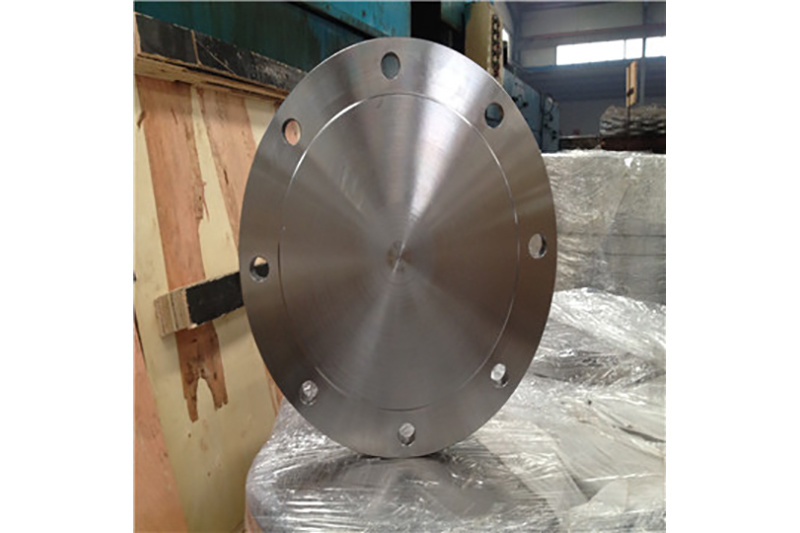
The Importance of Quality Control for Japanese Standard Flanges: Ensuring Durability and Reliability
The Importance of Quality Control for Japanese Standard Flanges In the construction and manufacturing sectors, the significance of quality control cannot be overstated, especially for components as crucial as flanges. Japanese standard flanges, known for their precision and durability, require stringent quality control measures to meet the demands of various applications. This article delves into
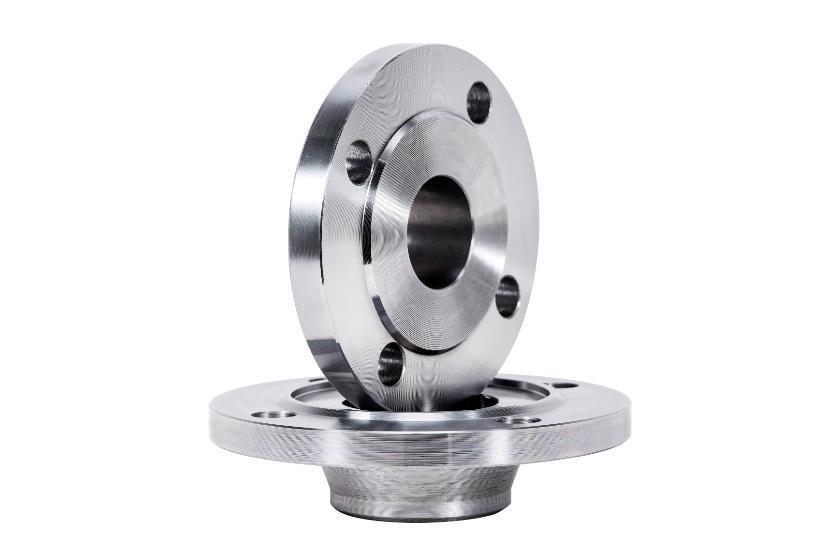
Understanding American Standard Flange in Construction and Decoration Materials
American standard flanges are critical components in the field of construction and decorative materials, particularly in piping systems. These flanges adhere to specific standards established by organizations such as the American National Standards Institute (ANSI) and the American Society of Mechanical Engineers (ASME). Their design and specifications are essential for ensuring compatibility and
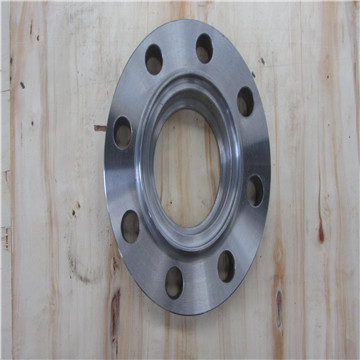
Exploring the Advantages of Using Threaded Flanges in HVAC Systems
Exploring the Advantages of Using Threaded Flanges in HVAC Systems Table of Contents 1. Introduction to Threaded Flanges in HVAC 2. Understanding Threaded Flanges 3. Benefits of Using Threaded Flanges in HVAC Systems 3.1 Superior Sealing Capability 3.2 Ease of Installation and Maintenance 3.3 Cost-Effectiveness 3.4 Versatility i

The Essential Guide to Flanged Connections in Building and Decorative Materials
Flanged connections are vital components in the construction and decorative materials sector, especially in the context of piping systems and fittings. Understanding their function, design, and application can significantly enhance the efficiency and reliability of installations. A flanged connection involves two flanges, which are flat pieces of material with holes for bolts. These flanges are bo
Shandong Xinhao Forging Co.,Ltd.
Tel:+86-15098858482
WeChat: 543983004
Email:xinhaoflange@gmail.com
Whatsapp:8615098858482
Website:www.xhflange.com

TikTok