

Comprehensive Step-by-Step Guide to the Forging of Stainless Steel Components
Release time:
2025-06-30
Comprehensive Step-by-Step Guide to the Forging of Stainless Steel Components Table of Contents Understanding Stainless Steel The Importance of Forging in Manufacturing Types of Forging Processes Step-by-Step Forging Process Post-Forging Treatments and Finishes Common Applications of Forged Stainless Steel Components Challenges in Forging Stainless Steel FAQs About
Comprehensive Step-by-Step Guide to the Forging of Stainless Steel Components
Table of Contents
- Understanding Stainless Steel
- The Importance of Forging in Manufacturing
- Types of Forging Processes
- Step-by-Step Forging Process
- Post-Forging Treatments and Finishes
- Common Applications of Forged Stainless Steel Components
- Challenges in Forging Stainless Steel
- FAQs About Stainless Steel Forging
- Conclusion
Understanding Stainless Steel
Stainless steel is an alloy composed mainly of iron, carbon, and chromium, renowned for its excellent corrosion resistance and strength. The addition of chromium (at least 10.5% by weight) creates a passive layer of chromium oxide on the surface, providing exceptional durability and aesthetic appeal. This unique combination of properties makes stainless steel a preferred material in various industries, including construction, automotive, and manufacturing.
Types of Stainless Steel
Stainless steel is categorized into several grades, primarily defined by their microstructure and alloying elements. The most common classifications include:
- Austenitic: Non-magnetic and highly ductile, ideal for welding and forming applications.
- Ferritic: Magnetic and less ductile, offering moderate corrosion resistance.
- Martensitic: High strength and hardness, used in applications like cutting tools and knives.
- Duplex: A combination of austenitic and ferritic structures, providing enhanced strength and resistance.
Understanding these grades is essential for selecting the right stainless steel type for forging components.
The Importance of Forging in Manufacturing
Forging is a crucial manufacturing process that shapes metal using localized compressive forces. This technique enhances the mechanical properties of the material, making it stronger and more durable.
Benefits of Forging Stainless Steel
The advantages of forging stainless steel components include:
- Improved Mechanical Properties: Forging aligns the grain structure, resulting in increased strength and ductility.
- Reduced Porosity: The forging process minimizes the presence of voids, leading to more reliable components.
- Better Surface Finish: Forged components often require less machining due to their superior surface quality.
- Versatility: Forging can accommodate various designs and complex shapes.
Types of Forging Processes
Several forging processes cater to different manufacturing needs, including:
Open-Die Forging
In open-die forging, the metal is placed between two flat dies and shaped by a hammer or press. This technique is suitable for larger components and allows for flexibility in design.
Closed-Die Forging
Closed-die forging involves placing the metal in a die cavity shaped like the desired component. This method enhances dimensional accuracy and surface finish.
Upset Forging
Upset forging increases the diameter of a metal piece while shortening its length. This technique is commonly used for producing bolts and fasteners.
Roll Forging
Roll forging reduces the cross-section of a metal piece by passing it through cylindrical rollers. This method is efficient for producing long, continuous shapes.
Step-by-Step Forging Process
The forging process consists of several critical steps that ensure the successful production of stainless steel components.
Step 1: Material Selection
Choosing the right stainless steel grade is the first and foremost step. Factors such as corrosion resistance, strength requirements, and application specifications must be considered.
Step 2: Heating the Material
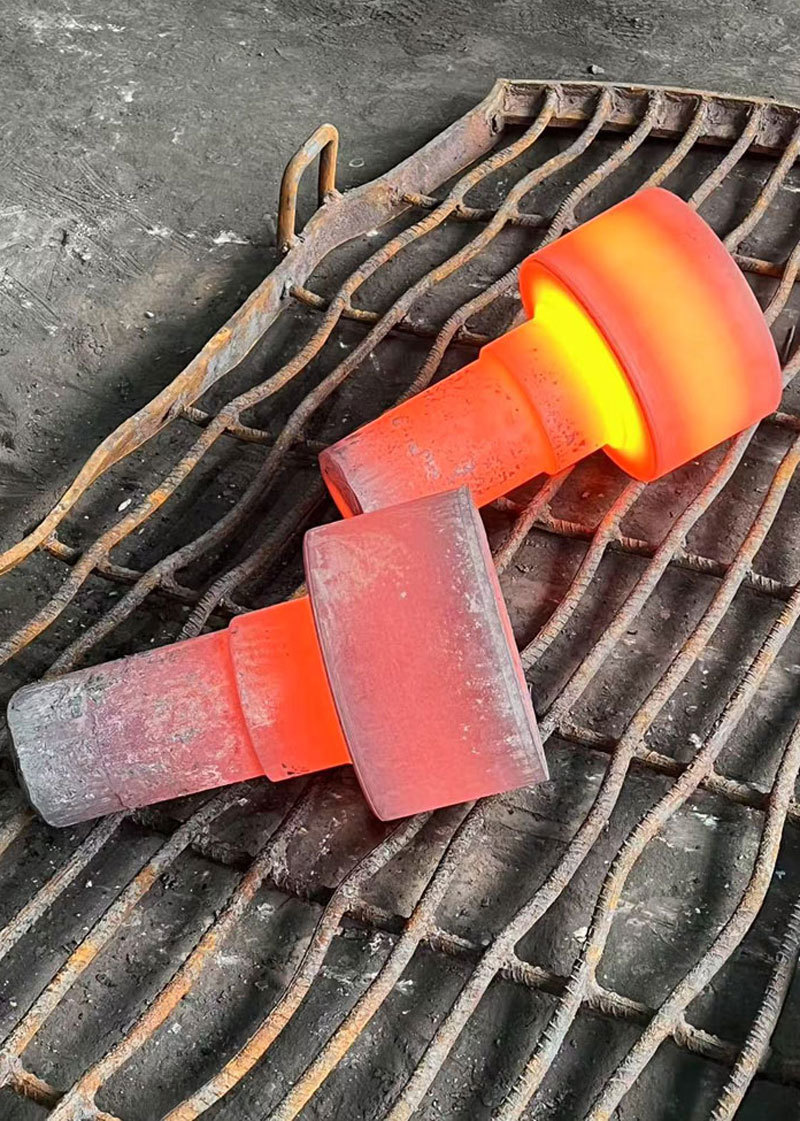
The selected stainless steel is heated to a specific temperature, known as the forging temperature, which typically ranges between 1,100°F to 2,300°F (593°C to 1,260°C). This helps to achieve optimal ductility and malleability.
Step 3: Forging the Component
Once heated, the stainless steel is subjected to the chosen forging process. The metal is shaped using hammers, presses, or dies, depending on the forging method selected.
Step 4: Cooling the Forged Component
After forging, the component is allowed to cool, typically in air. Controlled cooling rates help to avoid internal stresses and maintain the desired mechanical properties.
Step 5: Trimming and Finishing
Excess material or flash is trimmed from the forged component to achieve precise dimensions. The surface is then finished to meet specific requirements, such as polishing or coating for enhanced corrosion resistance.
Step 6: Quality Control
Every forged component undergoes rigorous quality control checks to ensure it meets stringent specifications. This may include non-destructive testing, dimension checks, and mechanical property evaluations.
Post-Forging Treatments and Finishes
After the forging process, several treatments can enhance the properties of stainless steel components.
Aging
Aging treatments can improve hardness and strength by promoting specific microstructural changes within the stainless steel.
Annealing
Annealing is a heat treatment process that relieves stresses, enhances ductility, and refines the microstructure.
Surface Treatments
Various surface treatments, such as passivation, coating, or polishing, can be applied to improve corrosion resistance and aesthetic qualities.
Common Applications of Forged Stainless Steel Components
Forged stainless steel components find application in numerous industries due to their exceptional strength and durability.
Aerospace Industry
Forged stainless steel parts are crucial in aerospace applications, where strength-to-weight ratios are paramount.
Oil and Gas Industry
Components used in pipelines and drilling equipment benefit from the enhanced properties offered by forging.
Automotive Industry
Forged parts, such as crankshafts and connecting rods, provide vital structural integrity in vehicles.
Challenges in Forging Stainless Steel
Despite its advantages, forging stainless steel presents several challenges.
High Tooling Costs
The initial investment for forging tools and dies can be significant, impacting overall production costs.
Temperature Control
Maintaining the correct forging temperature is critical; deviations can lead to defects in the final product.
FAQs About Stainless Steel Forging
What is the main advantage of forging stainless steel over casting?
Forging aligns the grain structure of the metal, resulting in superior strength and toughness compared to cast components, which can be more brittle.
How does the choice of stainless steel grade affect the forging process?
Different grades of stainless steel have varying mechanical properties, melting points, and workability, which influence the forging temperature and technique used.
Can all stainless steel grades be forged?
While many stainless steel grades can be forged, some may require specific conditions or treatments to achieve the desired properties.
What industries benefit the most from forged stainless steel components?
Industries such as aerospace, automotive, oil and gas, and construction heavily rely on forged stainless steel components due to their strength and corrosion resistance.
How does the post-forging treatment impact the final product?
Post-forging treatments can enhance properties such as hardness, corrosion resistance, and ductility, significantly affecting the component's performance in its intended application.
Conclusion
The forging of stainless steel components plays a pivotal role in manufacturing, providing unmatched strength, durability, and corrosion resistance. By understanding the intricacies of the forging process, including material selection, forging techniques, and post-forging treatments, manufacturers can achieve high-quality components tailored to specific applications. As industries continue to evolve, the demand for forged stainless steel components will grow, highlighting the importance of mastering this critical manufacturing process.
Investing time and resources into understanding stainless steel forging is essential for businesses aiming to enhance their product offerings and maintain a competitive edge in the marketplace.
Latest developments
Quality Standards in the Forging of Stainless Steel Products: Ensuring Excellence in Metallurgy
Quality Standards in the Forging of Stainless Steel Products Table of Contents Introduction to Stainless Steel Forging The Importance of Quality Standards in Forging Types of Stainless Steel Used in Forging Common Forging Processes in Stainless Steel Manufacturing Quality Assurance Methodologies in Stainless Steel Forging Testing and Certification of Stainless Steel Products Global
Understanding Non-Standard Flanges: A Key Component in Architectural Applications
Non-standard flanges are specialized components that deviate from conventional sizing and design specifications. Unlike standard flanges, which adhere to established dimensions and pressure ratings, non-standard flanges are custom-made to meet unique project requirements. These flanges are crucial in various architectural and construction applications, particularly when dealing with unconventional
The Importance of Quality Control for Japanese Standard Flanges: Ensuring Durability and Reliability
The Importance of Quality Control for Japanese Standard Flanges In the construction and manufacturing sectors, the significance of quality control cannot be overstated, especially for components as crucial as flanges. Japanese standard flanges, known for their precision and durability, require stringent quality control measures to meet the demands of various applications. This article delves into
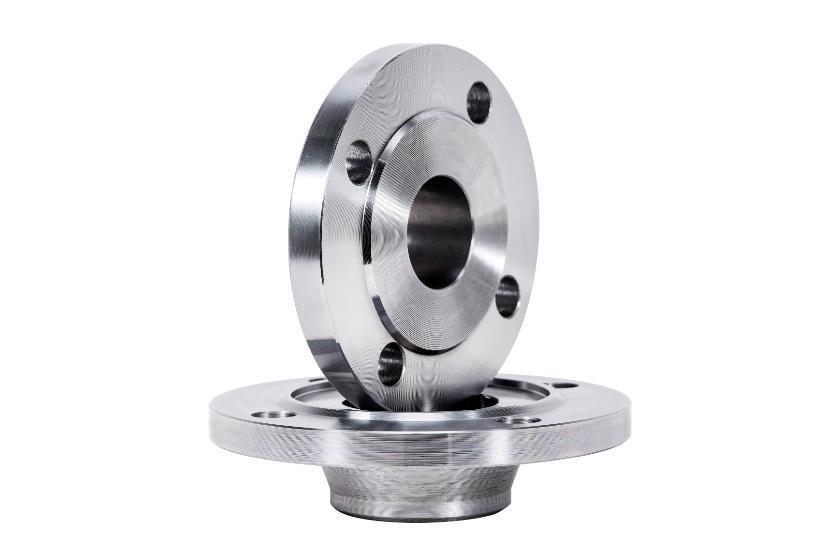
Understanding American Standard Flange in Construction and Decoration Materials
American standard flanges are critical components in the field of construction and decorative materials, particularly in piping systems. These flanges adhere to specific standards established by organizations such as the American National Standards Institute (ANSI) and the American Society of Mechanical Engineers (ASME). Their design and specifications are essential for ensuring compatibility and
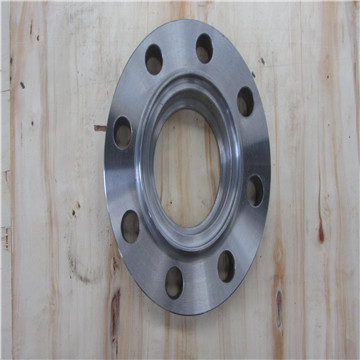
Exploring the Advantages of Using Threaded Flanges in HVAC Systems
Exploring the Advantages of Using Threaded Flanges in HVAC Systems Table of Contents 1. Introduction to Threaded Flanges in HVAC 2. Understanding Threaded Flanges 3. Benefits of Using Threaded Flanges in HVAC Systems 3.1 Superior Sealing Capability 3.2 Ease of Installation and Maintenance 3.3 Cost-Effectiveness 3.4 Versatility i

The Essential Guide to Flanged Connections in Building and Decorative Materials
Flanged connections are vital components in the construction and decorative materials sector, especially in the context of piping systems and fittings. Understanding their function, design, and application can significantly enhance the efficiency and reliability of installations. A flanged connection involves two flanges, which are flat pieces of material with holes for bolts. These flanges are bo
Shandong Xinhao Forging Co.,Ltd.
Tel:+86-15098858482
WeChat: 543983004
Email:xinhaoflange@gmail.com
Whatsapp:8615098858482
Website:www.xhflange.com

TikTok