

Key Considerations in the Forging of Stainless Steel Parts: A Comprehensive Guide
Release time:
2026-06-04
Key Considerations in the Forging of Stainless Steel Parts Table of Contents 1. Introduction to Stainless Steel Forging 2. Understanding Stainless Steel: Composition and Properties 3. Benefits of Forging Stainless Steel Parts 4. The Forging Process: Step-by-Step Breakdown 5. Key Considerations in Designing Forged Parts 6. Quality Control in Forging Stainless Steel 7. C
Key Considerations in the Forging of Stainless Steel Parts
Table of Contents
- 1. Introduction to Stainless Steel Forging
- 2. Understanding Stainless Steel: Composition and Properties
- 3. Benefits of Forging Stainless Steel Parts
- 4. The Forging Process: Step-by-Step Breakdown
- 5. Key Considerations in Designing Forged Parts
- 6. Quality Control in Forging Stainless Steel
- 7. Common Defects in Forged Stainless Steel Parts
- 8. Future Trends in Stainless Steel Forging Technology
- 9. Frequently Asked Questions
- 10. Conclusion
1. Introduction to Stainless Steel Forging
Stainless steel forging is a crucial manufacturing process that involves shaping stainless steel into desired forms through the application of compressive forces. This technique enhances the mechanical properties of stainless steel parts, making them more durable and resistant to corrosion. The demand for high-performance forged stainless steel components spans various industries, including aerospace, automotive, and construction. Understanding the key considerations in the forging process ensures that manufacturers can produce parts that meet stringent quality and performance standards.
2. Understanding Stainless Steel: Composition and Properties
Before diving into the forging process, it’s essential to understand what stainless steel is and why it is a popular choice for forging. Stainless steel is an alloy primarily composed of iron, carbon, and a minimum of 10.5% chromium. The chromium content is crucial as it forms a protective oxide layer on the surface, enhancing corrosion resistance.
2.1 Types of Stainless Steel
Stainless steel is categorized into several grades, each offering unique mechanical properties and corrosion resistance. The most common types used in forging include:
- **Austenitic Stainless Steel**: Known for excellent ductility and corrosion resistance. Common grades include 304 and 316.
- **Ferritic Stainless Steel**: Offers good resistance to stress corrosion cracking, typically used in automotive applications.
- **Martensitic Stainless Steel**: Known for high strength and hardness, suitable for applications requiring wear resistance.
2.2 Key Properties of Forged Stainless Steel
Forged stainless steel possesses several key properties that differentiate it from other manufacturing processes:
- **High Strength**: The forging process aligns the grain structure, increasing strength and toughness.
- **Improved Fatigue Resistance**: Forged parts exhibit better fatigue resistance, making them ideal for dynamic applications.
- **Enhanced Ductility**: The process allows for complex shapes without compromising the material's integrity.
3. Benefits of Forging Stainless Steel Parts
Forging stainless steel offers numerous advantages over other manufacturing methods, such as casting. Key benefits include:
- **Superior Mechanical Properties**: Enhanced strength and toughness due to refined grain structure.
- **Consistency and Reliability**: Forged parts demonstrate less variability in mechanical properties, ensuring consistent performance.
- **Cost-Effectiveness**: Although initial costs may be higher, the longevity and reduced failure rates of forged components lead to lower lifetime costs.
4. The Forging Process: Step-by-Step Breakdown
Understanding the forging process is vital for achieving high-quality stainless steel parts. The process typically involves several key steps:
4.1 Material Selection
Choosing the right grade of stainless steel is critical. Factors such as corrosion resistance, strength requirements, and cost influence material selection.
4.2 Heating the Material
Stainless steel is heated to a specific temperature to make it malleable. The temperature range varies depending on the grade but typically falls between 1100°C and 1300°C.
4.3 Forging Techniques
Several forging techniques can be employed, including:
- **Open Die Forging**: Involves placing the heated metal between two flat dies, allowing for versatility in shape.
- **Closed Die Forging**: Uses molds to create specific shapes and dimensions, ideal for mass production.
4.4 Cooling and Heat Treatment
After forging, stainless steel parts are cooled gradually to prevent cracking. Heat treatment processes like annealing may be applied to relieve internal stresses and enhance properties.
5. Key Considerations in Designing Forged Parts
When designing forged stainless steel components, several factors play a critical role:
5.1 Design Complexity
The complexity of the design affects the forging technique chosen. Simple shapes may benefit from open die forging, while intricate designs may require closed die forging.
5.2 Tolerances and Specifications
Establishing precise tolerances is essential in ensuring the finished product meets performance requirements. Tighter tolerances may require more advanced forging techniques.
5.3 Post-Processing Requirements
Designers must consider any necessary post-processing steps, such as machining or surface treatments, that may be required to achieve the desired finish.
6. Quality Control in Forging Stainless Steel
Quality control is paramount in stainless steel forging to ensure the final product meets all specifications. Key quality control measures include:
6.1 Material Inspection
Before forging, incoming materials should be inspected for compliance with specifications. This may involve chemical composition analysis and physical property testing.
6.2 In-Process Monitoring
Monitoring the forging process in real-time can help identify issues early, preventing defects from propagating. Techniques like temperature monitoring and force application tracking are useful.
6.3 Final Inspection
After forging, a thorough inspection should assess dimensional accuracy, surface finish, and overall quality. Non-destructive testing methods can be employed to identify internal defects.
7. Common Defects in Forged Stainless Steel Parts
Even with a robust quality control process, defects can occur in forged stainless steel components. Common issues include:
7.1 Cracks and Fractures
Cracks can develop during the heating or cooling stages, often due to improper temperature management.
7.2 Incomplete Forging
Incomplete forging occurs when the material does not fill the die cavity, resulting in underdeveloped features.
7.3 Surface Defects
Surface imperfections can arise during the forging process, affecting the part's aesthetic and functional properties.
8. Future Trends in Stainless Steel Forging Technology
The forging industry is evolving, driven by advancements in technology and material science. Key trends include:
8.1 Automation and Robotics
The integration of robotics and automation in the forging process enhances precision and reduces labor costs.
8.2 Advanced Materials
Emerging materials with superior properties may expand the possibilities of stainless steel forging, enabling new applications.
8.3 Sustainable Practices
As industries shift toward sustainability, forging processes are increasingly focusing on minimizing waste and energy consumption.
9. Frequently Asked Questions
9.1 What are the typical applications of forged stainless steel parts?
Forged stainless steel parts are commonly used in industries such as aerospace, automotive, oil and gas, and medical devices.
9.2 How does forging improve the mechanical properties of stainless steel?
Forging refines the grain structure of stainless steel, resulting in increased strength, toughness, and fatigue resistance.
9.3 What factors influence the cost of forged stainless steel parts?
The cost is influenced by material selection, design complexity, required tolerances, and production volume.
9.4 Can forged stainless steel parts be welded?
Yes, forged stainless steel parts can be welded, but it is crucial to use compatible welding techniques and filler materials to maintain performance.
9.5 What are the advantages of closed die forging over open die forging?
Closed die forging provides greater precision, better surface finish, and higher repeatability, making it ideal for mass production of complex shapes.
10. Conclusion
Forging stainless steel parts is a complex yet rewarding process that requires careful consideration of various factors, from material selection to design and quality control. By understanding the intricacies of stainless steel forging, manufacturers can produce high-quality components that meet demanding industry standards. As technology continues to advance, staying informed about the latest trends and techniques will be crucial for success in this dynamic field. Armed with this knowledge, we can confidently navigate the challenges and opportunities that lie ahead in the world of stainless steel forging.
Previous
Latest developments
Key Considerations in the Forging of Stainless Steel Parts: A Comprehensive Guide
Key Considerations in the Forging of Stainless Steel Parts Table of Contents 1. Introduction to Stainless Steel Forging 2. Understanding Stainless Steel: Composition and Properties 3. Benefits of Forging Stainless Steel Parts 4. The Forging Process: Step-by-Step Breakdown 5. Key Considerations in Designing Forged Parts 6. Quality Control in Forging Stainless Steel 7. C
Understanding Non-Standard Flanges: Key Insights for Building and Decoration Professionals
Non-standard flanges play a crucial role in the building and decoration materials sector, particularly in piping systems where conventional dimensions do not suffice. These specialized flanges are custom-made to meet specific project requirements, ensuring seamless integration within various architectural designs and operational parameters. Understanding the characteristics and applications of non
The Advantages of Using Japanese Standard Flanges in Water Supply Systems
The Advantages of Using Japanese Standard Flanges in Water Supply Systems In today's rapidly evolving construction industry, choosing the right components for water supply systems is crucial for ensuring efficiency, safety, and longevity. Among the various fittings available in the market, **Japanese standard flanges** stand out due to their exceptional quality and design. This article delves into
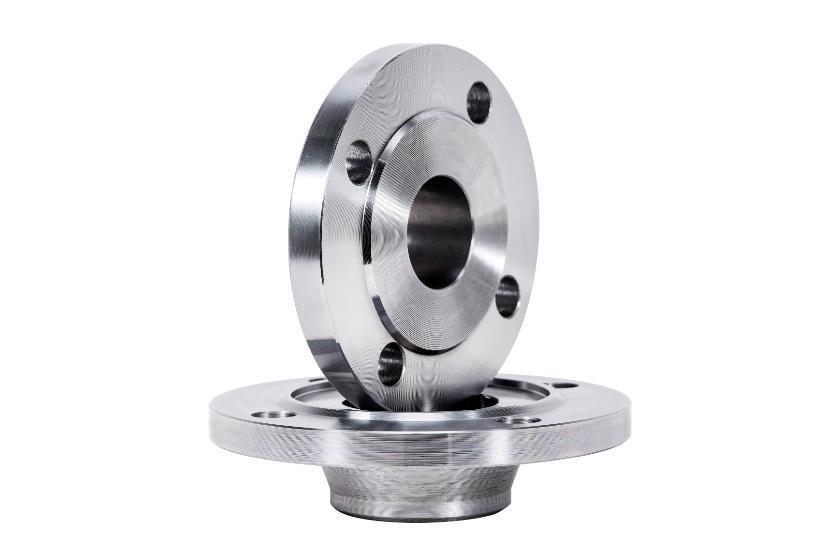
Understanding American Standard Flanges: Key Insights for Your Construction Needs
American standard flanges are pivotal components in the construction and plumbing industries, serving as critical connectors between sections of piping, valves, and other equipment. Understanding the specifics of these flanges can significantly enhance your project’s integrity and efficiency. Flanges come in various types and standards, but the American National Standards Institute (ANSI) governs
Threaded Flanges: The Unsung Heroes of Pipeline Systems
Threaded Flanges: The Unsung Heroes of Pipeline Systems Table of Contents 1. Introduction to Threaded Flanges 2. What Are Threaded Flanges? 3. Benefits of Using Threaded Flanges 4. Types of Threaded Flanges 5. Applications of Threaded Flanges 6. Installation and Maintenance of Threaded Flanges 7. Common Mistakes to Avoid with Threaded Flanges 8. Comparison with Other Types of Flan

Understanding Flanged Connections: Essential Insights for Construction and Decor Materials
Flanged connections are critical components in various piping systems, widely utilized in the construction and decorative materials sector, specifically concerning fittings and flanges. Understanding the fundamentals of flanged connections is essential for ensuring the integrity and performance of piping systems. At its core, a flanged connection consists of two flat surfaces, or flanges, that are
Shandong Xinhao Forging Co.,Ltd.
Tel:+86-15098858482
WeChat: 543983004
Email:xinhaoflange@gmail.com
Whatsapp:8615098858482
Website:www.xhflange.com

TikTok